Freight Transport for Development
2011
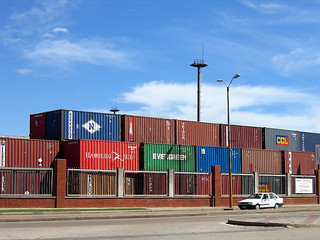
This case study reflects on the institutional framework that can contribute to increasing the competitive position of a country’s logistic services sector. It also highlights that cooperation between public and private sectors is required.
Foto: conecta9
Bajar documento
Blog que muestra publicaciones de Transporte (Urbano, Interurbano, Rural) (Logística, Transporte de Carga) (Transporte Sostenible: Bicicletas y Transporte no-motorizado - activo, Transporte Público, Seguridad Vial) y más...
Showing posts with label Transport Planning. Show all posts
Wednesday, April 25, 2012
Tuesday, April 24, 2012
La seguridad vial en la región de América Latina y el Caribe: Situación actual y resultados
CEPAL
Serie Recursos Naturales e Infraestructura
Nº 102
Noviembre 2005
La seguridad vial, se convierte en un problema de gravedad creciente si pensamos que existen estimaciones que indican que en los países de América Latina y el Caribe, entre el año 2000 y el 2020, el número de víctimas mortales por el tránsito crecerá en un 48%, 149% en el Asia Meridional y aún cuando las predicciones son mejores para los países de Europa Oriental y Asia Central se estima un aumento del 19%. Con el objeto de enfrentar esta realidad, la Unidad de Transporte de la CEPAL ha encargado un estudio sobre la situación referente a la seguridad vial en los países de América Latina y el Caribe, para cubrir, entre otros, los siguientes temas: * Tasas de accidentes viales, personas lesionadas en estos accidentes, fallecimientos a raíz de estos accidentes, por habitante y por vehículo motorizado, comparando la situación en los países de la región con la de países asiáticos, en transición e industrializados; * La incorporación de la seguridad vial en la planificación del sector transporte y en la evaluación de proyectos; * Las instituciones relacionadas con el tema de la seguridad vial en los distintos países de la región, el papel de cada uno de ellos, y los mecanismos de planificación de actividades relacionadas con la seguridad en la región, y; * Conclusiones generales en los países de la región respecto a la seguridad vial.
Se espera que dado el tiempo asignado al estudio, se debería cubrir una selección representativa de los países de la región, incluyendo (i) cinco de Sudamérica; (ii) México; (iii) cuatro de América Central y los países de habla española del Caribe, y (iv) dos otros de la subregión caribeña.
Las secciones siguientes de este informe dan cuenta del trabajo realizado, los datos obtenidos, y las conclusiones y recomendaciones que de él se desprenden.
Bajar documento
Serie Recursos Naturales e Infraestructura
Nº 102
Noviembre 2005
La seguridad vial, se convierte en un problema de gravedad creciente si pensamos que existen estimaciones que indican que en los países de América Latina y el Caribe, entre el año 2000 y el 2020, el número de víctimas mortales por el tránsito crecerá en un 48%, 149% en el Asia Meridional y aún cuando las predicciones son mejores para los países de Europa Oriental y Asia Central se estima un aumento del 19%. Con el objeto de enfrentar esta realidad, la Unidad de Transporte de la CEPAL ha encargado un estudio sobre la situación referente a la seguridad vial en los países de América Latina y el Caribe, para cubrir, entre otros, los siguientes temas: * Tasas de accidentes viales, personas lesionadas en estos accidentes, fallecimientos a raíz de estos accidentes, por habitante y por vehículo motorizado, comparando la situación en los países de la región con la de países asiáticos, en transición e industrializados; * La incorporación de la seguridad vial en la planificación del sector transporte y en la evaluación de proyectos; * Las instituciones relacionadas con el tema de la seguridad vial en los distintos países de la región, el papel de cada uno de ellos, y los mecanismos de planificación de actividades relacionadas con la seguridad en la región, y; * Conclusiones generales en los países de la región respecto a la seguridad vial.
Se espera que dado el tiempo asignado al estudio, se debería cubrir una selección representativa de los países de la región, incluyendo (i) cinco de Sudamérica; (ii) México; (iii) cuatro de América Central y los países de habla española del Caribe, y (iv) dos otros de la subregión caribeña.
Las secciones siguientes de este informe dan cuenta del trabajo realizado, los datos obtenidos, y las conclusiones y recomendaciones que de él se desprenden.
Bajar documento
Sunday, April 15, 2012
Plan de Movilidad de Montevideo
Intendencia de Montevideo
Febrero 2010
El objetivo general del Plan de Movilidad Urbana es la reestructuración y modernización del transporte urbano de Montevideo. El 30 de diciembre de 2008 la República Oriental del Uruguay firmó un convenio (Contrato de Préstamo Nº 2040/OC-UR) con el Banco Interamericano de Desarrollo para establecer una línea de crédito destinada a financiar el Plan por U$S 100.000.000.
El Organismo Ejecutor del Plan de Movilidad Urbana es la IMM, a través de la Unidad Ejecutiva del Plan de Movilidad Urbana, que depende del Departamento de Acondicionamiento Urbano.
El programa incluye entre los componentes a desarrollar:
Descargas
Libro "Plan de Movilidad, hacia un sistema de movilidad accesible, democrático y eficiente. 2010-2020"
Folleto "Plan de Movilidad, hacia un sistema de movilidad accesible, democrático y eficiente. 2010-2020"
Informe final Centro de Verificación Logística
Imágenes de Zona de actividad logística
Caracterizacion de camiones de acuerdo al MTOP
Resolución Departamental sobre limites al transporte de cargas
zonas_montevideo_referencias.jpg
Febrero 2010
El objetivo general del Plan de Movilidad Urbana es la reestructuración y modernización del transporte urbano de Montevideo. El 30 de diciembre de 2008 la República Oriental del Uruguay firmó un convenio (Contrato de Préstamo Nº 2040/OC-UR) con el Banco Interamericano de Desarrollo para establecer una línea de crédito destinada a financiar el Plan por U$S 100.000.000.
El Organismo Ejecutor del Plan de Movilidad Urbana es la IMM, a través de la Unidad Ejecutiva del Plan de Movilidad Urbana, que depende del Departamento de Acondicionamiento Urbano.
El programa incluye entre los componentes a desarrollar:
- Construcción y adecuación de carriles exclusivos y preferenciales, conservación y ampliación de la red vial, incluyendo obras de alumbrado público, readecuación de áreas verdes y calzadas.
- Obras en terminales de trasbordo e intercambiadores y reacondicionamiento urbano en sus zonas de influencia.
- Ampliación y sincronización de la red de semáforos.
- Señalización horizontal en pintura termoplástico.
- Señalización vertical en cartelería.
- Incorporación del sistema de información y billetaje electrónico en el transporte colectivo.
- Campañas de sensibilización y difusión.
- Consultas y encuestas a la población de Montevideo.
- Toda otra obra y acciones necesarias para llevar adelante el Plan de Movilidad Urbana.
Descargas
Libro "Plan de Movilidad, hacia un sistema de movilidad accesible, democrático y eficiente. 2010-2020"
Folleto "Plan de Movilidad, hacia un sistema de movilidad accesible, democrático y eficiente. 2010-2020"
Informe final Centro de Verificación Logística
Imágenes de Zona de actividad logística
Caracterizacion de camiones de acuerdo al MTOP
Resolución Departamental sobre limites al transporte de cargas
zonas_montevideo_referencias.jpg
Monday, January 23, 2012
Accessibility in passenger transport: policy and management
Research in Transportation Business & Management
Volume 2, Pages 1-100
November 2011
Accessibility Policy and Planning
Does Accessibility Planning address what matters? A review of current practice and practitioner perspectives Original Research Article
Pages 3-11
Angela Curl, John D. Nelson, Jillian Anable
The use and abuse of accessibility measures in UK passenger transport planning Original Research Article
Pages 12-19
Derek Halden
Implementing accessibility planning for disadvantaged areas and groups
Improving access to employment and training in former coalfields areas in the UK: The Access Alliance Programme Original Research Article
Pages 20-28
Norman James, Clare Waldron
Developing and applying interactive visual tools to enhance stakeholder engagement in accessibility planning for mobility disadvantaged groups Original Research Article
Pages 29-41
Peter Jones
Management of accessibility by mode and by spatial area
Learning to cycle again: Examining the benefits of providing tax-free loans to purchase new bicycles Original Research Article
Pages 42-47
Brian Caulfield, James Leahy
Public transport accessibility through co-modality: Are interconnectivity indicators good enough? Original Research Article
Pages 48-56
Claudia de Stasio, Davide Fiorello, Silvia Maffii
Business strategies and technology for access by transit in lower density environments Original Research Article
Pages 57-64
Roger F. Teal, A. Jeff Becker
The key factors for providing successful public transport in low-density areas in The Netherlands Original Research Article
Pages 65-73
Wouter de Jong, Janneke Vogels, Karolien van Wijk, Otto Cazemier
Market concentration in coastal shipping and limitations to island's accessibility Original Research Article
Pages 74-82
Maria B. Lekakou, Thomas K. Vitsounis
Economic evaluation of accessibiltiy improvements
Passengers' valuations of universal design measures in public transport Original Research Article
Pages 83-91
Nils Fearnley, Stefan Flügel, Farideh Ramjerdi
Evaluating accessibility enhancements to public transport including indirect as well as direct benefits Original Research Article
Pages 92-100
Xenia Karekla, Taku Fujiyama, Nick Tyler
View Journal
Volume 2, Pages 1-100
November 2011
Accessibility Policy and Planning
Does Accessibility Planning address what matters? A review of current practice and practitioner perspectives Original Research Article
Pages 3-11
Angela Curl, John D. Nelson, Jillian Anable
The use and abuse of accessibility measures in UK passenger transport planning Original Research Article
Pages 12-19
Derek Halden
Implementing accessibility planning for disadvantaged areas and groups
Improving access to employment and training in former coalfields areas in the UK: The Access Alliance Programme Original Research Article
Pages 20-28
Norman James, Clare Waldron
Developing and applying interactive visual tools to enhance stakeholder engagement in accessibility planning for mobility disadvantaged groups Original Research Article
Pages 29-41
Peter Jones
Management of accessibility by mode and by spatial area
Learning to cycle again: Examining the benefits of providing tax-free loans to purchase new bicycles Original Research Article
Pages 42-47
Brian Caulfield, James Leahy
Public transport accessibility through co-modality: Are interconnectivity indicators good enough? Original Research Article
Pages 48-56
Claudia de Stasio, Davide Fiorello, Silvia Maffii
Business strategies and technology for access by transit in lower density environments Original Research Article
Pages 57-64
Roger F. Teal, A. Jeff Becker
The key factors for providing successful public transport in low-density areas in The Netherlands Original Research Article
Pages 65-73
Wouter de Jong, Janneke Vogels, Karolien van Wijk, Otto Cazemier
Market concentration in coastal shipping and limitations to island's accessibility Original Research Article
Pages 74-82
Maria B. Lekakou, Thomas K. Vitsounis
Economic evaluation of accessibiltiy improvements
Passengers' valuations of universal design measures in public transport Original Research Article
Pages 83-91
Nils Fearnley, Stefan Flügel, Farideh Ramjerdi
Evaluating accessibility enhancements to public transport including indirect as well as direct benefits Original Research Article
Pages 92-100
Xenia Karekla, Taku Fujiyama, Nick Tyler
View Journal
Thursday, December 1, 2011
Plan Quinquenal de Transporte Argentino 2012-2016
Secretaria de Transporte
2011
La Secretaría de Transporte del Ministerio de Planificación Federal, Inversión Pública y Servicios de la Nación presenta estas "Bases para un Plan Quinquenal del Transporte 2012-2016" a los Sectores del Trabajo, Empresarial, Profesional y Gubernamental, como documento Institucional para el análisis, debate y posterior síntesis.
Los invitamos a dejar en esta página sus comentarios y perspectivas para la construcción de un plan estratégico para el sector. Los aportes pueden ser tanto técnicos, como experiencias laborales y de la vida cotidiana".
También se pueden enviar contribuciones a PLANDETRANSPORTE@GMAIL.COM
Ir al plan
2011
La Secretaría de Transporte del Ministerio de Planificación Federal, Inversión Pública y Servicios de la Nación presenta estas "Bases para un Plan Quinquenal del Transporte 2012-2016" a los Sectores del Trabajo, Empresarial, Profesional y Gubernamental, como documento Institucional para el análisis, debate y posterior síntesis.
Los invitamos a dejar en esta página sus comentarios y perspectivas para la construcción de un plan estratégico para el sector. Los aportes pueden ser tanto técnicos, como experiencias laborales y de la vida cotidiana".
También se pueden enviar contribuciones a PLANDETRANSPORTE@GMAIL.COM
Ir al plan
Monday, September 12, 2011
Ingeniería de caminos rurales: Guía de campo para las mejores prácticas de gestión de caminos rurales
Gordon Keller & James Sherar
US Forest Service International Programs -Brochure-
Enero 2008
El objetivo fundamental de esta guía es poder ayudar a ingenieros, planificadores, especialistas ambientales y administradores de caminos a tomar buenas decisiones, proteger el ambiente, y construir buenos caminos de bajo volumen. Los aspectos claves que deberían tomarse en cuenta durante la planificación de un proyecto de camino son los cambios o los impactos negativos que pueden inducirse en una cierta región por la presencia del camino, los cuales pueden resultar importantes a la vez que irreversibles o que pueden ser difíciles de mitigar. Por lo tanto, habrá necesidad de analizar la rentabilidad a largo plazo de un proyecto de camino, en lo que se refiere a costos en los aspectos sociales, ambientales y fiscales.
Bajar documento
US Forest Service International Programs -Brochure-
Enero 2008
Imagen de la publicación
El objetivo fundamental de esta guía es poder ayudar a ingenieros, planificadores, especialistas ambientales y administradores de caminos a tomar buenas decisiones, proteger el ambiente, y construir buenos caminos de bajo volumen. Los aspectos claves que deberían tomarse en cuenta durante la planificación de un proyecto de camino son los cambios o los impactos negativos que pueden inducirse en una cierta región por la presencia del camino, los cuales pueden resultar importantes a la vez que irreversibles o que pueden ser difíciles de mitigar. Por lo tanto, habrá necesidad de analizar la rentabilidad a largo plazo de un proyecto de camino, en lo que se refiere a costos en los aspectos sociales, ambientales y fiscales.
Bajar documento
Tuesday, September 6, 2011
Landscape fragmentation in Europe
European Environment Agency
September 2011
There is an increasing need and interest in including indicators of landscape fragmentation in monitoring systems of sustainable development, biodiversity, and landscape quality. We recommend that the results presented in this report be used for this purpose and be updated on a regular basis to detect trends in the development of landscape fragmentation.
Therefore, this report discusses the use of fragmentation analysis presented in this report as a tool for performance review in transportation planning and regional planning and recommends a set of measures to control landscape fragmentation, such as more effective protection of remaining unfragmented areas and wildlife corridors, the setting of targets and limits and a European defragmentation strategy. This study provides for the first time an accurate measurement of landscape fragmentation for most of the European continent, which supports managers and policymakers in allocating resources towards the protection and restoration of biodiversity and landscape quality. The report also identifies future research needs.
Bajar documento en PDF (12.6 MB)
September 2011
Image from the publication
There is an increasing need and interest in including indicators of landscape fragmentation in monitoring systems of sustainable development, biodiversity, and landscape quality. We recommend that the results presented in this report be used for this purpose and be updated on a regular basis to detect trends in the development of landscape fragmentation.
Therefore, this report discusses the use of fragmentation analysis presented in this report as a tool for performance review in transportation planning and regional planning and recommends a set of measures to control landscape fragmentation, such as more effective protection of remaining unfragmented areas and wildlife corridors, the setting of targets and limits and a European defragmentation strategy. This study provides for the first time an accurate measurement of landscape fragmentation for most of the European continent, which supports managers and policymakers in allocating resources towards the protection and restoration of biodiversity and landscape quality. The report also identifies future research needs.
Bajar documento en PDF (12.6 MB)
Tuesday, August 16, 2011
PARADA: Pacto Nacional pela Redução de Acidentes no Trânsito - Um Pacto pela Vida
DENATRAN - Departamento Nacional de Tránsito
Julio 2011
A Assembléia Geral das Nações Unidas, através de Resolução A/64/L44, publicada no dia 02 de março de 2010, proclamou o período de 2011 a 2020 como a “Década de Ações para a Segurança Viária".
A resolução recomenda aos países membro a elaboração de um plano diretor para guiar as ações nessa área no decênio, tendo como meta de estabilizar e reduzir os acidentes de trânsito em todo o mundo e foi elaborada com base em estudos da Organização Mundial de Saúde que estimou, em 2009, cerca de 1,3 milhões de mortes por acidente de trânsito em 178 países. De acordo com os estudos da OMS o Brasil aparece em 5º lugar entre os países recordistas em acidentes de trânsito precedido pela Índia, China, EUA e Rússia.
Em atendimento à recomendação da Organização das Nações Unidas o ministro das Cidades, Mário Negromonte e o ministro da Saúde, Alexandre Padilha, lançaram dia 11 de maio de 2011 o Pacto Nacional pela Redução de Acidentes no Trânsito - Um Pacto pela Vida, que tem como objetivo de buscar o engajamento dos poderes executivo, legislativo e judiciário, nos três níveis de governo, e da sociedade civil na redução dos acidentes e violência no trânsito.
Um dos principais objetivos do Pacto Nacional é a construção do Plano Nacional de Redução de Acidentes e Segurança Viária para a Década 2011-2020.
Nesse sentido, o Comitê Nacional de Mobilização pela Saúde, Segurança e Paz no Trânsito, instituído pelo Decreto Presidencial de 19 de setembro de 2007, reuniu-se para discutir e elaborar uma proposta preliminar do plano brasileiro. Essa proposta apresenta um conjunto articulado de medidas intersetoriais, através das quais se estabelecem ações, metas e cronogramas de execução, visando a redução de acidentes e mortes no trânsito.
Ver página de la campanha
Bajar Plano en versión preliminar
Julio 2011
A Assembléia Geral das Nações Unidas, através de Resolução A/64/L44, publicada no dia 02 de março de 2010, proclamou o período de 2011 a 2020 como a “Década de Ações para a Segurança Viária".
A resolução recomenda aos países membro a elaboração de um plano diretor para guiar as ações nessa área no decênio, tendo como meta de estabilizar e reduzir os acidentes de trânsito em todo o mundo e foi elaborada com base em estudos da Organização Mundial de Saúde que estimou, em 2009, cerca de 1,3 milhões de mortes por acidente de trânsito em 178 países. De acordo com os estudos da OMS o Brasil aparece em 5º lugar entre os países recordistas em acidentes de trânsito precedido pela Índia, China, EUA e Rússia.
Em atendimento à recomendação da Organização das Nações Unidas o ministro das Cidades, Mário Negromonte e o ministro da Saúde, Alexandre Padilha, lançaram dia 11 de maio de 2011 o Pacto Nacional pela Redução de Acidentes no Trânsito - Um Pacto pela Vida, que tem como objetivo de buscar o engajamento dos poderes executivo, legislativo e judiciário, nos três níveis de governo, e da sociedade civil na redução dos acidentes e violência no trânsito.
Um dos principais objetivos do Pacto Nacional é a construção do Plano Nacional de Redução de Acidentes e Segurança Viária para a Década 2011-2020.
Nesse sentido, o Comitê Nacional de Mobilização pela Saúde, Segurança e Paz no Trânsito, instituído pelo Decreto Presidencial de 19 de setembro de 2007, reuniu-se para discutir e elaborar uma proposta preliminar do plano brasileiro. Essa proposta apresenta um conjunto articulado de medidas intersetoriais, através das quais se estabelecem ações, metas e cronogramas de execução, visando a redução de acidentes e mortes no trânsito.
Ver página de la campanha
Bajar Plano en versión preliminar
Monday, August 15, 2011
Guidelines for the development of road safety master plans
Public Works and Infrastructure Development Department
Roads and Stormwater Division
Traffic Engineering and Operations Section
May 2009
The City of Tshwane Metropolitan Municipality is the administrative capital of the Republic of South Africa. The city is divided into 76 wards and a political representative (ward councillor) is elected for each ward. The city has a population of about two million people and is experiencing an annual population growth that is substantially higher than the national average for the country as a whole.
Tshwane is a city in transition and has a mix of established and historically disadvantaged areas. The disadvantaged areas are mainly situated to the north of the city. Since road safety in these areas was severely neglected in the past, the new municipality that came into being in 2000 was faced with the tremendous challenge of improving road safety and providing infrastructure in these areas. Fatality rates were high and the communities were discontented about the road safety situation.
The City of Tshwane acknowledged the problem and developed road safety master plans in collaboration with stakeholders and the community. The master plans mainly focused on the provision of engineering measures such as pedestrian bridges, walkways, raised pedestrian crossings, speed humps and loading facilities at schools, but due attention was also paid to education, awareness raising, law enforcement and evaluation.
The process has been found to be highly successful and has resulted in the City’s receiving a number of national and international awards. The process has now been implemented in all previously disadvantaged areas of the city and is being integrated in the established areas in the city.
Most of the road safety improvements in the City of Tshwane are targeted at areas with high levels of pedestrian activity. Low-income or disadvantaged communities are particularly vulnerable to pedestrian accidents. These communities often experience fatalities that are disproportionately high compared to communities with lower levels of pedestrian activity. In the past, there has been a tendency to address only the needs of motorised traffic; pedestrian needs have often been neglected.
The purpose of these guidelines is to provide an overview of the process of developing, implementing and maintaining road safety master plans as applied by the City. The process described in these guidelines has been refined through experience with a number of projects. It is a process that has been found to be highly acceptable to communities and to have a high level of sustainability. The process can readily be replicated in new areas and can therefore be applied generally for the development of road safety master plans.
Bajar documento
Roads and Stormwater Division
Traffic Engineering and Operations Section
May 2009
The City of Tshwane Metropolitan Municipality is the administrative capital of the Republic of South Africa. The city is divided into 76 wards and a political representative (ward councillor) is elected for each ward. The city has a population of about two million people and is experiencing an annual population growth that is substantially higher than the national average for the country as a whole.
Tshwane is a city in transition and has a mix of established and historically disadvantaged areas. The disadvantaged areas are mainly situated to the north of the city. Since road safety in these areas was severely neglected in the past, the new municipality that came into being in 2000 was faced with the tremendous challenge of improving road safety and providing infrastructure in these areas. Fatality rates were high and the communities were discontented about the road safety situation.
The City of Tshwane acknowledged the problem and developed road safety master plans in collaboration with stakeholders and the community. The master plans mainly focused on the provision of engineering measures such as pedestrian bridges, walkways, raised pedestrian crossings, speed humps and loading facilities at schools, but due attention was also paid to education, awareness raising, law enforcement and evaluation.
The process has been found to be highly successful and has resulted in the City’s receiving a number of national and international awards. The process has now been implemented in all previously disadvantaged areas of the city and is being integrated in the established areas in the city.
Most of the road safety improvements in the City of Tshwane are targeted at areas with high levels of pedestrian activity. Low-income or disadvantaged communities are particularly vulnerable to pedestrian accidents. These communities often experience fatalities that are disproportionately high compared to communities with lower levels of pedestrian activity. In the past, there has been a tendency to address only the needs of motorised traffic; pedestrian needs have often been neglected.
The purpose of these guidelines is to provide an overview of the process of developing, implementing and maintaining road safety master plans as applied by the City. The process described in these guidelines has been refined through experience with a number of projects. It is a process that has been found to be highly acceptable to communities and to have a high level of sustainability. The process can readily be replicated in new areas and can therefore be applied generally for the development of road safety master plans.
Bajar documento
Wednesday, August 10, 2011
Intelligent Transport Systems
Sustainable Urban Transport Project
September 2009
The module was written by Mr. Phil Sayeg and Prof. Phil Charles and also updated by the authors.
Unregistered visitors may register here , login and proceed to download.
Web version
En español (2011):
Sistemas de transporte inteligentes
Módulo 4e
Transporte sostenible: Texto de referencia para formuladores de políticas públicas de ciudades en desarrollo
September 2009
GTZ sourcebook module on "Intelligent Transport Systems" updated
Technology has been playing an important role in promoting vehicular safety, reducing driving stress, comfortable travel and increased efficiency of the whole transport system. These technologies applied in a package are called “Intelligent Transport System (ITS)”.
Often, policy-makers are in a situation where they are not properly informed on the right technological choices. The GTZ Sourcebook module on “Intelligent Transport Systems (ITS)” focuses on choices for a city and also informs the reader of the various available ITS options, their function and advantage.
The module was written by Mr. Phil Sayeg and Prof. Phil Charles and also updated by the authors.
Unregistered visitors may register here , login and proceed to download.
Web version
En español (2011):
Sistemas de transporte inteligentes
Módulo 4e
Transporte sostenible: Texto de referencia para formuladores de políticas públicas de ciudades en desarrollo
Tuesday, August 9, 2011
Developing Tajikistan's transport sector
Asian Development Bank
February 2011
As a small landlocked country, Tajikistan depends on external trade for its development, and its export-driven businesses in agriculture and industry require transport that is fast, reliable, and cheap. Tajikistan must increase its connectivity to world markets. The country partnership strategy for 2010–2014 aims to develop transport infrastructure, build human capacity, and achieve good governance. Tajikistan is active in the Central Asia Regional Economic Cooperation (CAREC) Program, which aims to develop seamless connectivity in the region. Tajikistan has also developed a national transport sector master plan with Asian Development Bank (ADB) assistance. The plan is supportive of CAREC’s Transport and Trade Facilitation Strategy (2008–2018) and Tajikistan’s national development program. ADB will provide financial and technical assistance to support its implementation.
Contents
Bajar documento
February 2011
As a small landlocked country, Tajikistan depends on external trade for its development, and its export-driven businesses in agriculture and industry require transport that is fast, reliable, and cheap. Tajikistan must increase its connectivity to world markets. The country partnership strategy for 2010–2014 aims to develop transport infrastructure, build human capacity, and achieve good governance. Tajikistan is active in the Central Asia Regional Economic Cooperation (CAREC) Program, which aims to develop seamless connectivity in the region. Tajikistan has also developed a national transport sector master plan with Asian Development Bank (ADB) assistance. The plan is supportive of CAREC’s Transport and Trade Facilitation Strategy (2008–2018) and Tajikistan’s national development program. ADB will provide financial and technical assistance to support its implementation.
Contents
- Preface
- Transport Sector Profile
- Challenges
- Opportunities
- Strategic Direction
- Development Action Plan
Bajar documento
Friday, June 24, 2011
Formulation of a national environmentally sustainable transport strategy for the Phillipines
Final report
UNCRD
May 2011
The overall objective of this endeavor is to develop and mainstream EST strategies that are sensitive to future development scenarios. Strategies should be developed considering future development scenarios such as vehicle growth, level of urbanization, population density, and economic growth. The overall goal of the strategy may be seen in the following:
The formulation of the national strategy is primarily intended for the identification of priority challenges in the context of EST that would need to be addressed through the formulation of strategies. These strategies will have specific targets, incorporate multi-sector commitments, and recommend measures for the promotion of EST in Philippines.
Bajar documento
EST Initiative page
UNCRD
May 2011
The overall objective of this endeavor is to develop and mainstream EST strategies that are sensitive to future development scenarios. Strategies should be developed considering future development scenarios such as vehicle growth, level of urbanization, population density, and economic growth. The overall goal of the strategy may be seen in the following:
- Reduction of the annual growth rate of energy consumption and associated green house gas (GHG) and air pollutant emissions from the transport sector especially in urban areas of the country;
- Enhance sustainable mobility through the development of a viable market for environmentally sustainable transport (EST) goods and services, which involves, among others, the promotion of transportation systems of low carbon intensity and shift towards the use of more sustainable transport modes.
The formulation of the national strategy is primarily intended for the identification of priority challenges in the context of EST that would need to be addressed through the formulation of strategies. These strategies will have specific targets, incorporate multi-sector commitments, and recommend measures for the promotion of EST in Philippines.
Bajar documento
EST Initiative page
Environmentally sustainable transport for asian cities: A sourcebook
Lloyd Wright
UNCRD
March 2010
Asian cities are at a crossroads. Along the current path, growing numbers of cars and motorcycles will overwhelm streets and neighbourhoods. Pollution, congestion, and accidents will become Asia’s defining features. The cities will be less a place for human interaction than for storing and operating metal machines. Yet, there is another path. Environmentally Sustainable Transport (EST) offers an alternative to uncontrolled motorisation and its related problems. Instead, a complementary package of public transport, quality footpaths and cycleways, vehicle restriction measures, clean fuels, safety programmes, and high standards will create a new paradigm for urban mobility and access.
Many cities in the region, such as Seoul and Singapore, have already adapted many of these elements as part of a comprehensive policy towards a more human urban environment. This EST Sourcebook sets forth the elements of a complete EST strategy for Asian cities.
Bajar documento
UNCRD
March 2010
© Photo from the publication
Asian cities are at a crossroads. Along the current path, growing numbers of cars and motorcycles will overwhelm streets and neighbourhoods. Pollution, congestion, and accidents will become Asia’s defining features. The cities will be less a place for human interaction than for storing and operating metal machines. Yet, there is another path. Environmentally Sustainable Transport (EST) offers an alternative to uncontrolled motorisation and its related problems. Instead, a complementary package of public transport, quality footpaths and cycleways, vehicle restriction measures, clean fuels, safety programmes, and high standards will create a new paradigm for urban mobility and access.
Many cities in the region, such as Seoul and Singapore, have already adapted many of these elements as part of a comprehensive policy towards a more human urban environment. This EST Sourcebook sets forth the elements of a complete EST strategy for Asian cities.
Bajar documento
Thursday, January 13, 2011
Sustainable roads and optimal mobility
Discussion paper
IRF Brussels Programme Centre
European Union Road Federation
October 2009
Contenidos:
I) Introduction
II) Evaluating the impact of having sustainable roads
III)Some best practices
IV) Financing sustainable roads: Is it a luxury?
V) ERF-IRF BPC recommendations
VI) About the authors
Bajar documento
IRF Brussels Programme Centre
European Union Road Federation
October 2009
Contenidos:
I) Introduction
II) Evaluating the impact of having sustainable roads
III)Some best practices
IV) Financing sustainable roads: Is it a luxury?
V) ERF-IRF BPC recommendations
VI) About the authors
Bajar documento
Friday, January 7, 2011
Making sustainable transport politically and publicly acceptable: Lessons from the EU, USA and Canada
David Banister, John Pucher and Martin Lee-Gosselin
University College London, Rutgers University, New Jersey, and Laval University, Quebec City
in: Institutions and Sustainable Transport: Regulatory Reform in Advanced Economies. Cheltenham, England: Edward Elgar Publishing, 2007, pp. 17-50
Bajar documento
University College London, Rutgers University, New Jersey, and Laval University, Quebec City
in: Institutions and Sustainable Transport: Regulatory Reform in Advanced Economies. Cheltenham, England: Edward Elgar Publishing, 2007, pp. 17-50
In recent years much of the literature has supported the need to achieve greater sustainability in the transport system. Even though there still remains some uncertainty about the effectiveness of alternative policies, many promising measures have been implemented in an increasing number of cities and countries throughout the world. The next steps must be to encourage a more widespread adoption of best practice in the implementation of sustainable transport policies. Thus, the most pressing problem is how to make sustainable transport policies more acceptable, both among the general public and their elected politicians. In this chapter, we investigate ways to increase the acceptability of such policies, using case study material from the USA, Canada and the EU.
Bajar documento
Travel Surveys
A1D10: Committee on Travel Survey Methods
Chairman: Elaine Murakami, Federal Highway Administration
TRB
ROBERT GRIFFITHS, Metropolitan Washington Council of Governments
A. J. RICHARDSON, University of Sydney, Australia
MARTIN E. H. LEE-GOSSELIN, Université Laval, Quebec City, Canada
Access the document
Chairman: Elaine Murakami, Federal Highway Administration
TRB
ROBERT GRIFFITHS, Metropolitan Washington Council of Governments
A. J. RICHARDSON, University of Sydney, Australia
MARTIN E. H. LEE-GOSSELIN, Université Laval, Quebec City, Canada
Travel surveys will continue to be one of the most important ways of obtaining the critical information needed for transportation planning and decision making in the new millennium. Not only will these surveys be used to gather current information about the demographic, socioeconomic, and trip-making characteristics of individuals and households, but they will also be used to further our understanding of travel in relation to the choice, location, and scheduling of daily activities. This will enable us to enhance our travel forecasting methods and improve our ability to predict changes in daily travel patterns in response to current social and economic trends and new investments in transportation systems and services. These travel surveys will also play a role in evaluating changes in transportation supply and regulation as they occur.
Access the document
Thursday, January 6, 2011
Public Policies for Pedestrian and Bicyclist Safety and Mobility: An Implementation Project of the Pedestrian and Bicyclist Safety and Mobility International Scan
Federal Highway Administration
Office of International Programs
August 2010
Access the document
Office of International Programs
August 2010
In May 2009, a team of 12 transportation professionals from the United States with expertise in bicycling and walking visited five countries in Europe to identify and assess effective approaches to improve pedestrian and bicyclist safety and mobility. The countries visited—Denmark, Germany, Sweden, Switzerland, and the United Kingdom—were chosen because of their innovative approaches to pedestrian and bicycle transportation, as well as the potential transferability of their policies and practices. Later in 2009, the international scan team developed a summary report that outlined its findings and a list of recommended implementation actions. One of the highest rated implementation actions was the development of a policy review for bicycling and walking safety and mobility. This report is the result of that recommended implementation action. The purpose of this report is to identify and provide examples of effective policies and implementing programs that support pedestrian and bicyclist safety and mobility. The examples are from cities in the United States, as well as from other countries (in particular, the five countries visited in the international scan).
Thursday, December 17, 2009
Preliminary National Rail Plan: The Groundwork for Developing Policies to Improve the United States Transportation System
Federal Railroad Administration
October 2009
Access the plan
October 2009
This Preliminary Plan sets forth the FRA’s proposed approach to developing the long-range National Rail Plan, including our goals and objectives for the greater inclusion of rail in the national transportation system. Although this Preliminary Plan does not generally offer specific recommendations, it identifies a number of issues that this agency believes should be considered in formulating the National Rail Plan.
In short, it is designed to create a springboard for further discussion. The FRA especially looks forward to input from the States, and freight railroads, who are expected to provide valuable information and perspectives. The end focus is on the shippers and riders who use the rail system. We welcome the participation of all transportation stakeholders on these issues as well as others that may be presented, as we develop the long-range National plan. Outreach efforts such as the Rail Safety Advisory Committee and the high-speed rail development efforts have been very successful. These and other activities have given FRA a reputation for strong and extensive outreach; the development of a National Rail Plan will be in line with this model.
Access the plan
Monday, December 14, 2009
Caderno de Referência para Elaboração de Plano de Mobilidade por Bicicleta nas Cidades
Coleção Bicicleta Brasil
Programa Brasileiro de Mobilidade por Bicicleta
Caderno 1
Secretaria Nacional de Transporte e da Mobilidade Urbana
Brasil
2007
Este “Caderno de Referência para elaboração de Plano de Mobilidade por Bicicleta nas Cidades” representa um esforço da SeMob em fornecer subsídios para os municípios que têm intenção de implantar um plano cicloviário, integrado aos demais modos existentes, formando uma rede de transporte. Portanto, ele servirá como um importante instrumento para a formulação e desenvolvimento da mobilidade urbana devendo considerar-se as características locais e regionais, sempre com a participação da sociedade, sobretudo das organizações de usuários de bicicletas.
Access the document
Programa Brasileiro de Mobilidade por Bicicleta
Caderno 1
Secretaria Nacional de Transporte e da Mobilidade Urbana
Brasil
2007
Este “Caderno de Referência para elaboração de Plano de Mobilidade por Bicicleta nas Cidades” representa um esforço da SeMob em fornecer subsídios para os municípios que têm intenção de implantar um plano cicloviário, integrado aos demais modos existentes, formando uma rede de transporte. Portanto, ele servirá como um importante instrumento para a formulação e desenvolvimento da mobilidade urbana devendo considerar-se as características locais e regionais, sempre com a participação da sociedade, sobretudo das organizações de usuários de bicicletas.
Access the document
Friday, December 11, 2009
PIARC Catalogue of design safety problems and potential countermeasures
PIARC
October 2009
The situations considered are organized within 8 groups:
Function
Cross Section
Alignment
Intersections
Public and Private Services
Vulnerable Road Users
Traffic Signing and marking
Roadside Features
For each case, a sheet is presented with several illustrations.
Publication details
Access the document
October 2009
This catalogue presents a set of commonly design errors and suggests a range of measures to overcome them; it also gives an indication of the comparative countermeasure costs to facilitate prioritisation of the work. The catalogue can be used both as a proactive safety tool to ensure the design faults do not arise in the first place, or a reactive safety tool to assist in designing cost-effective countermeasures where problems already exist on the road network.
The situations considered are organized within 8 groups:
Function
Cross Section
Alignment
Intersections
Public and Private Services
Vulnerable Road Users
Traffic Signing and marking
Roadside Features
For each case, a sheet is presented with several illustrations.
Publication details
Access the document
Subscribe to:
Posts (Atom)


