Frost & Sullivan
January 2013
Over the past two decades delivering goods into the cities has become a challenge with cities getting overly congested and traffic jams resulting in expensive logistics bottlenecks. In fact, studies show that the cost of congestion now in terms of time wasted in traffic and fuel consumption is off the roof, almost 200% more than what it was in the 1980s. And congestion is only a part of the urban delivery problem. Pollution, lack of parking bays, and warehousing costs are all restraints that are contributing to the economic cost of urban logistics.
There is already a paradigm shift in how products are being manufactured (3D printing) and retailed (transition to online channels) today and the common denominator, supply chain, at all stages of a product's lifecycle must quickly adapt to the changes as well. While it will take another decade or so for 3D printing to become mainstream, the growing market of online retail has already significantly impacted the industry. In order to understand these shifts, it is important to understand the megatrends that directly influence them.
Mega trends and Urban Logistics
We see four main Mega trends that will impact urban logistics - urbanisation, connectivity and convergence, bricks and clicks and multimodality (high speed rail).
Ir al reporte
Monday, February 4, 2013

Monday, January 28, 2013
The fantasy world of private finance for transport via public private partnerships
Jean SHAOUL, Anne STAFFORD and Pam STAPLETON
Manchester Business School,University of Manchester,
United Kingdom
September 2012
Discussion Paper No. 2012-6
Prepared for the Roundtable on: Public Private Partnerships for Funding Transport Infrastructure: Sources of Funding, Managing Risk and Optimism Bias
(27-28 September 2012)
International Transport Forum
A key message of this paper is that it is more costly for the public sector to use the private sector as financial intermediaries. This is due in part to the higher cost of commercial over public debt and the cost of the profit margin of both the private partner and its extensive supply chain. But there are also the not inconsiderable legal and financial advisors’ fees to each of the numerous parties to the transaction to structure and negotiate it
Bajar documento
Manchester Business School,University of Manchester,
United Kingdom
September 2012
Discussion Paper No. 2012-6
Prepared for the Roundtable on: Public Private Partnerships for Funding Transport Infrastructure: Sources of Funding, Managing Risk and Optimism Bias
(27-28 September 2012)
International Transport Forum
A key message of this paper is that it is more costly for the public sector to use the private sector as financial intermediaries. This is due in part to the higher cost of commercial over public debt and the cost of the profit margin of both the private partner and its extensive supply chain. But there are also the not inconsiderable legal and financial advisors’ fees to each of the numerous parties to the transaction to structure and negotiate it
Bajar documento
Wednesday, April 25, 2012
Challenges for urban freight in Mexico city
Freight Transport for Development
May 2011
 Foto: Omar Omar
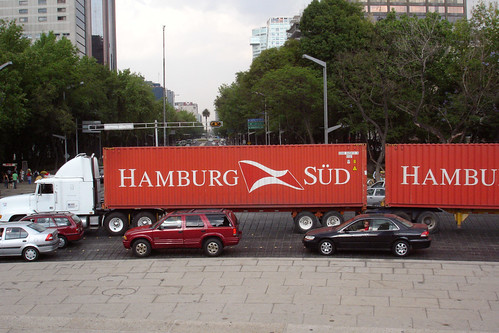
This case study aims to show what freight transport related challenges policy makers in metropolitan areas are facing. It shows that interaction and cooperation within the institutional framework is very important and that a complex institutional framework jeopardizes good governance. The case study describes institutional challenges, environmental challenges and infrastructure related challenges. It also summarizes a number policy measures that could potentially improve the situation in Mexico city.
Bajar documento
May 2011
This case study aims to show what freight transport related challenges policy makers in metropolitan areas are facing. It shows that interaction and cooperation within the institutional framework is very important and that a complex institutional framework jeopardizes good governance. The case study describes institutional challenges, environmental challenges and infrastructure related challenges. It also summarizes a number policy measures that could potentially improve the situation in Mexico city.
Bajar documento
Desarrollo urbano y movilidad en América Latina
CAF
Enero 2012

Esta publicación resume la evolución de la movilidad y el desarrollo urbano para 15 áreas metropolitanas de América Latina que forman parte del Observatorio de Movilidad Urbana (OMU) de CAF. Para esto, un grupo de expertos describen su historia y las condiciones actuales de la movilidad en sus territorios con datos del OMU. De esta forma, el documento permite un análisis integrado, con comparaciones entre los procesos ocurridos en la región.
El libro ha sido estructurado en capítulos por cada área metropolitana, que describen sucintamente la historia del desarrollo urbano y de su sistema de transporte e incorporan datos de las condiciones actuales de la movilidad. Un capítulo adicional compara las condiciones de movilidad actuales de las 15 ciudades y resume los datos completos del reporte oficial del OMU (CAF, 2010).
Por último, se presentan las conclusiones obtenidas del análisis efectuado sobre las ciudades presentadas. El libro constituye un aporte para el análisis que debería realizarse, en el menor plazo posible, de la situación de la urbanización en América Latina para estructurar políticas públicas y comportamientos que contribuyan al desarrollo y a la sostenibilidad de las áreas urbanas de la región y su movilidad.
Bajar documento
Enero 2012
Esta publicación resume la evolución de la movilidad y el desarrollo urbano para 15 áreas metropolitanas de América Latina que forman parte del Observatorio de Movilidad Urbana (OMU) de CAF. Para esto, un grupo de expertos describen su historia y las condiciones actuales de la movilidad en sus territorios con datos del OMU. De esta forma, el documento permite un análisis integrado, con comparaciones entre los procesos ocurridos en la región.
El libro ha sido estructurado en capítulos por cada área metropolitana, que describen sucintamente la historia del desarrollo urbano y de su sistema de transporte e incorporan datos de las condiciones actuales de la movilidad. Un capítulo adicional compara las condiciones de movilidad actuales de las 15 ciudades y resume los datos completos del reporte oficial del OMU (CAF, 2010).
Por último, se presentan las conclusiones obtenidas del análisis efectuado sobre las ciudades presentadas. El libro constituye un aporte para el análisis que debería realizarse, en el menor plazo posible, de la situación de la urbanización en América Latina para estructurar políticas públicas y comportamientos que contribuyan al desarrollo y a la sostenibilidad de las áreas urbanas de la región y su movilidad.
Bajar documento
Development of an Institutional framework for optimization of the National Logistics Plan for Uruguay
Freight Transport for Development
2011
 This case study reflects on the institutional framework that can contribute to increasing the competitive position of a country’s logistic services sector. It also highlights that cooperation between public and private sectors is required.
Foto: conecta9
Bajar documento
2011
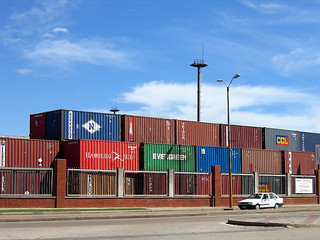
Foto: conecta9
Bajar documento
Experiencias exitosas contra la inseguridad vial: Sistematización de los resultados del II Concurso Nacional de Seguridad Vial
Gobierno de la Ciudad de Buenos Aires
Dirección Nacional de Observatorio Vial
OPS

Las "Experiencias exitosas" o también conocidas como "Mejores prácticas" son un concepto creado por las Naciones Unidas y por la Comunidad Internacional, que define un conjunto de iniciativas que buscan mejorar la calidad de vida y la sostenibilidad de las ciudades y las comunidades.
Las mejores prácticas sirven:
Finalmente, saber "que funciona" es la esencia del desarrollo de buenas políticas y programas.
Aprendamos Jugando - Lotería Vial - Municipio de Urdinarrain
Control Alcoholemia - Municipio de Urdinarrain
Uso del Casco - Municipio de Urdinarrain
Experiencia de Uso de Casco - Municipio de Urdinarrain
Dirección Nacional de Observatorio Vial
OPS

Las "Experiencias exitosas" o también conocidas como "Mejores prácticas" son un concepto creado por las Naciones Unidas y por la Comunidad Internacional, que define un conjunto de iniciativas que buscan mejorar la calidad de vida y la sostenibilidad de las ciudades y las comunidades.
Las mejores prácticas sirven:
- Como instrumento para mejorar la política en materia pública.
- Para aumentar el grado de conciencia de los responsables de formular políticas y de la comunidad sobre las posibles soluciones a problemas de tipo social, económico y ambiental.
- Para compartir y transferir el conocimiento y la experiencia a través del aprendizaje mediante un sistema de red.
- Como memoria institucional. Esto permite aprender de otros.
- Como herramienta para ayudar a los políticos a desarrollar sus programas de trabajo.
- Como facilitador de la cooperación técnica entre comunidades.
- Como evidencia científica.
Finalmente, saber "que funciona" es la esencia del desarrollo de buenas políticas y programas.
Aprendamos Jugando - Lotería Vial - Municipio de Urdinarrain
Control Alcoholemia - Municipio de Urdinarrain
Uso del Casco - Municipio de Urdinarrain
Experiencia de Uso de Casco - Municipio de Urdinarrain
Tuesday, April 24, 2012
La seguridad vial en la región de América Latina y el Caribe: Situación actual y resultados
CEPAL
Serie Recursos Naturales e Infraestructura
Nº 102
Noviembre 2005
La seguridad vial, se convierte en un problema de gravedad creciente si pensamos que existen estimaciones que indican que en los países de América Latina y el Caribe, entre el año 2000 y el 2020, el número de víctimas mortales por el tránsito crecerá en un 48%, 149% en el Asia Meridional y aún cuando las predicciones son mejores para los países de Europa Oriental y Asia Central se estima un aumento del 19%. Con el objeto de enfrentar esta realidad, la Unidad de Transporte de la CEPAL ha encargado un estudio sobre la situación referente a la seguridad vial en los países de América Latina y el Caribe, para cubrir, entre otros, los siguientes temas: * Tasas de accidentes viales, personas lesionadas en estos accidentes, fallecimientos a raíz de estos accidentes, por habitante y por vehículo motorizado, comparando la situación en los países de la región con la de países asiáticos, en transición e industrializados; * La incorporación de la seguridad vial en la planificación del sector transporte y en la evaluación de proyectos; * Las instituciones relacionadas con el tema de la seguridad vial en los distintos países de la región, el papel de cada uno de ellos, y los mecanismos de planificación de actividades relacionadas con la seguridad en la región, y; * Conclusiones generales en los países de la región respecto a la seguridad vial.
Se espera que dado el tiempo asignado al estudio, se debería cubrir una selección representativa de los países de la región, incluyendo (i) cinco de Sudamérica; (ii) México; (iii) cuatro de América Central y los países de habla española del Caribe, y (iv) dos otros de la subregión caribeña.
Las secciones siguientes de este informe dan cuenta del trabajo realizado, los datos obtenidos, y las conclusiones y recomendaciones que de él se desprenden.
Bajar documento
Serie Recursos Naturales e Infraestructura
Nº 102
Noviembre 2005
La seguridad vial, se convierte en un problema de gravedad creciente si pensamos que existen estimaciones que indican que en los países de América Latina y el Caribe, entre el año 2000 y el 2020, el número de víctimas mortales por el tránsito crecerá en un 48%, 149% en el Asia Meridional y aún cuando las predicciones son mejores para los países de Europa Oriental y Asia Central se estima un aumento del 19%. Con el objeto de enfrentar esta realidad, la Unidad de Transporte de la CEPAL ha encargado un estudio sobre la situación referente a la seguridad vial en los países de América Latina y el Caribe, para cubrir, entre otros, los siguientes temas: * Tasas de accidentes viales, personas lesionadas en estos accidentes, fallecimientos a raíz de estos accidentes, por habitante y por vehículo motorizado, comparando la situación en los países de la región con la de países asiáticos, en transición e industrializados; * La incorporación de la seguridad vial en la planificación del sector transporte y en la evaluación de proyectos; * Las instituciones relacionadas con el tema de la seguridad vial en los distintos países de la región, el papel de cada uno de ellos, y los mecanismos de planificación de actividades relacionadas con la seguridad en la región, y; * Conclusiones generales en los países de la región respecto a la seguridad vial.
Se espera que dado el tiempo asignado al estudio, se debería cubrir una selección representativa de los países de la región, incluyendo (i) cinco de Sudamérica; (ii) México; (iii) cuatro de América Central y los países de habla española del Caribe, y (iv) dos otros de la subregión caribeña.
Las secciones siguientes de este informe dan cuenta del trabajo realizado, los datos obtenidos, y las conclusiones y recomendaciones que de él se desprenden.
Bajar documento
Transportation's role in reducing U.S. Greenhouse gas emissions
Vol 1: Synthesis report
U.S. Department of Transportation
Report to Congress
April 2010
A number of strategies can be used to reduce greenhouse gas emissions from transportation, such as using low-carbon fuels, increasing vehicle fuel economy, improving system efficiency and reducing travel that involves high levels of carbon emissions, according to a report released ... by the U.S. Department of Transportation (DOT).
Full Press release by Department of Transportation
Access the document
U.S. Department of Transportation
Report to Congress
April 2010
A number of strategies can be used to reduce greenhouse gas emissions from transportation, such as using low-carbon fuels, increasing vehicle fuel economy, improving system efficiency and reducing travel that involves high levels of carbon emissions, according to a report released ... by the U.S. Department of Transportation (DOT).
Full Press release by Department of Transportation
Access the document
Reducing Greenhouse Gas Emissions from U.S. Transportation
David L. Greene and Howard H. Baker, Jr. - Center for Public Policy
Steven E. Plotkin - Argonne National Laboratory
PEW
January 2011
 Transportation is vital to our economy and quality of life. But it is also the primary cause of U.S. oil dependency, and is responsible for more than a quarter of U.S. emissions of the greenhouse gases that are warming our planet. This report examines whether we can substantially reduce greenhouse gas (GHG) emissions from U.S. transportation. Report authors David Greene and Steve Plotkin provide three plausible scenarios of technology, policy, and public attitudes that result in cost-effective GHG reductions throughout the transportation sector. The High Mitigation Scenario shows we can reduce GHG emissions from transportation by as much as 65 percent below today’s levels by 2050. In order to do so, we need action on three fronts: targeted public policies, technological progress, and commitment from Americans as consumers and citizens.
Video
Bajar documento
Steven E. Plotkin - Argonne National Laboratory
PEW
January 2011
Video
Bajar documento
Sunday, April 22, 2012
Infraestructura y servicios de transporte ferroviario vinculados a las vías de navegación fluvial en América del Sur
Gordon Wilmsmeier
Serie de recursos naturales e infraestructura Nº 124
CEPAL
Octubre 2007
El transporte de carga ha abierto amplios horizontes para la economía internacional, permitiendo el avance de la especialización geográfica y que la industria utilice fuentes de servicio a escala global. Aún así, el mercado de transporte en América del Sur exige una integración adicional, incluyendo la conexión de todos los puntos nodales dentro de la región hasta las regiones fronterizas, casi siempre aisladas.
Dentro de las cargas transportadoras el transporte por ferrocarril en América del Sur sigue siendo el de menor importancia tanto a nivel nacional como subregional. Pero con el auge de la exportación y el interés renovado en el desarrollo de infraestructura crece la posibilidad de crear un nuevo enfoque, que incluye no solo la percepción unimodal, sino también la multimodal o intermodal.
Se destaca las posibilidades del transporte ferroviario de conectar regiones aisladas con las vías fluviales lo cual permite el fácil acceso a los puertos marítimos aguas abajo. En el presente estudio, se analiza este potencial bajo una visión conducente al desarrollo sustentable del transporte, con un impacto menor sobre el medio ambiente.
En base a un planteamiento metodológico y ejemplos, se llega a la conclusión de que es necesario iniciar un proceso político que tome en cuenta los impactos del transporte y la movilidad de las cargas. Este proceso debe poner énfasis en el potencial del desarrollo económico de regiones aisladas a través de la integración de los modos ferro-fluvial en América del Sur. Una visión unificada y la implementación de una política de transporte regional integrada puede resolver distorsiones y crear competitividad y eficiencia no solamente dentro del sector de transporte, sino también en su interacción con los otros sectores económicos y también sociales.
Bajar documento
Serie de recursos naturales e infraestructura Nº 124
CEPAL
Octubre 2007
El transporte de carga ha abierto amplios horizontes para la economía internacional, permitiendo el avance de la especialización geográfica y que la industria utilice fuentes de servicio a escala global. Aún así, el mercado de transporte en América del Sur exige una integración adicional, incluyendo la conexión de todos los puntos nodales dentro de la región hasta las regiones fronterizas, casi siempre aisladas.
Dentro de las cargas transportadoras el transporte por ferrocarril en América del Sur sigue siendo el de menor importancia tanto a nivel nacional como subregional. Pero con el auge de la exportación y el interés renovado en el desarrollo de infraestructura crece la posibilidad de crear un nuevo enfoque, que incluye no solo la percepción unimodal, sino también la multimodal o intermodal.
Se destaca las posibilidades del transporte ferroviario de conectar regiones aisladas con las vías fluviales lo cual permite el fácil acceso a los puertos marítimos aguas abajo. En el presente estudio, se analiza este potencial bajo una visión conducente al desarrollo sustentable del transporte, con un impacto menor sobre el medio ambiente.
En base a un planteamiento metodológico y ejemplos, se llega a la conclusión de que es necesario iniciar un proceso político que tome en cuenta los impactos del transporte y la movilidad de las cargas. Este proceso debe poner énfasis en el potencial del desarrollo económico de regiones aisladas a través de la integración de los modos ferro-fluvial en América del Sur. Una visión unificada y la implementación de una política de transporte regional integrada puede resolver distorsiones y crear competitividad y eficiencia no solamente dentro del sector de transporte, sino también en su interacción con los otros sectores económicos y también sociales.
Bajar documento
Seaports of the Americas Directory 2012
The authoritative and comprehensive guide to the seaports, port authorities and port industry of the Americas
American Association of Port Authorities
2012

AAPA's comprehensive annual profile & directory of the seaports, port authorities, terminal operators & port services industry of the Western Hemisphere and official annual AAPA membership directory. Published annually in March...in print and online.
Bajar documento
American Association of Port Authorities
2012
AAPA's comprehensive annual profile & directory of the seaports, port authorities, terminal operators & port services industry of the Western Hemisphere and official annual AAPA membership directory. Published annually in March...in print and online.
Bajar documento
Thursday, April 19, 2012
Urban Freight in Developing Cities
Bernhard O. Herzog
SUTP
November 2010
 This new GTZ Sourcebook module describes the importance of freight transportation in the context of urban development and provides detailed information on available options to meet current and future challenges for urban goods transport in rapidly growing cities of the developing world.
The module has been written by Bernhard O. Herzog, expert in the field of freight operation and fleet-management with more than 30 years experience in the field of transport planning and logistics.
The publication contains 62 fully illustrated pages 51 figures, 19 boxes and 8 tables. Additionally it provides further reading and links on additional aspects of urban freight.
Bajar documento
Bajar documento (in english)
SUTP
November 2010

The module has been written by Bernhard O. Herzog, expert in the field of freight operation and fleet-management with more than 30 years experience in the field of transport planning and logistics.
The publication contains 62 fully illustrated pages 51 figures, 19 boxes and 8 tables. Additionally it provides further reading and links on additional aspects of urban freight.
Bajar documento
Bajar documento (in english)
Urban transport and energy efficiency
(Susanne Böhler-Baedeker and Hanna Hüging)
Module 5h - Sustainable Transport: A sourcebook for policy-makers in developing countries
SUTP
January 2012
 Considering the challenges of limited oil resources, increasing energy prices, climate change, environmental pollution and health risks, it is essential to establish an efficient transport system that meets demand, but consumes as little energy as possible. The SUTP Sourcebook Module 5h titled "Urban Transport and Energy Efficiency" serves as a navigator for decision makers and stakeholders, including local and national authorities, the private sector and non-governmental organisations. It provides a comprehensive overview of measures and policies designed to promote greater energy efficiency in transport, and assigns specific tasks and responsibilities to particular parties. Case studies illustrate international experiences in implementing measures to increase energy efficiency in transport.
Foto: Wuppertal Institute
Bajar documento (bottom of the page)
Module 5h - Sustainable Transport: A sourcebook for policy-makers in developing countries
SUTP
January 2012

Foto: Wuppertal Institute
Bajar documento (bottom of the page)
Adapting road procurement to climate conditions
Iimi, Atsushi; Benamghar, Radia
World Bank
Policy Research working paper ; no. WPS 6029
April 2012
The world's climate is changing. It is well recognized that technical standards and project specifications of public infrastructure have to be adjusted, depending on the climate. However, it is less recognized that the public infrastructure procurement also needs to be adjusted. This paper examines a particular case of rural road procurement in Nepal. Severe weather conditions, such as heavy rains and storms, are likely to interrupt civil works and wash away unpaved or gravel roads. It is found that heavy precipitation causes delays, but not cost overruns. The paper also shows that budgetary efficiency and credibility could be improved by taking climate conditions into account. If future precipitation were anticipated by backward-looking expectations, many large project delays could be avoided. If the autoregressive precipitation model were used, the vast majority of the observed delays could be eliminated.
Bajar documento
World Bank
Policy Research working paper ; no. WPS 6029
April 2012
The world's climate is changing. It is well recognized that technical standards and project specifications of public infrastructure have to be adjusted, depending on the climate. However, it is less recognized that the public infrastructure procurement also needs to be adjusted. This paper examines a particular case of rural road procurement in Nepal. Severe weather conditions, such as heavy rains and storms, are likely to interrupt civil works and wash away unpaved or gravel roads. It is found that heavy precipitation causes delays, but not cost overruns. The paper also shows that budgetary efficiency and credibility could be improved by taking climate conditions into account. If future precipitation were anticipated by backward-looking expectations, many large project delays could be avoided. If the autoregressive precipitation model were used, the vast majority of the observed delays could be eliminated.
Bajar documento
The impact of demand on cargo dwell time in ports in SSA
Beuran, Monica; Mahihenni, Mohamed Hadi; Raballand, Gael ; Refas, Salim;
World Bank
Policy Research working paper ; no. WPS 6014
Marzo 2012
Long cargo dwell times in ports are a critical issue in Sub-Saharan African countries since they result in slow import processes and are bound to dramatically reduce trade. The main objective of this study is to analyze long dwell times' causes in ports in Sub-Saharan Africa from a shipper's perspective. The findings point to the crucial importance of private sector practices and incentives. The authors argue in the case of Sub-Saharan African countries that private operators, rather than being advocates of reforms in this area, might be responsible for the failures of many of these initiatives. It seems that in Sub-Saharan Africa importers' and freight forwarders' professionalism, cash constraints and operators' strategies are some of the factors that have a major impact on cargo dwell time. Low competency, cash constraints and low storage tariffs explain why most importers have little incentive to reduce cargo dwell time since in most cases, this would increase their input costs. However, monopolists/cartels may have a stronger incentive to reduce cargo dwell time but only in order to maximize their profit (and would not adjust prices downward).
Bajar documento
World Bank
Policy Research working paper ; no. WPS 6014
Marzo 2012
Long cargo dwell times in ports are a critical issue in Sub-Saharan African countries since they result in slow import processes and are bound to dramatically reduce trade. The main objective of this study is to analyze long dwell times' causes in ports in Sub-Saharan Africa from a shipper's perspective. The findings point to the crucial importance of private sector practices and incentives. The authors argue in the case of Sub-Saharan African countries that private operators, rather than being advocates of reforms in this area, might be responsible for the failures of many of these initiatives. It seems that in Sub-Saharan Africa importers' and freight forwarders' professionalism, cash constraints and operators' strategies are some of the factors that have a major impact on cargo dwell time. Low competency, cash constraints and low storage tariffs explain why most importers have little incentive to reduce cargo dwell time since in most cases, this would increase their input costs. However, monopolists/cartels may have a stronger incentive to reduce cargo dwell time but only in order to maximize their profit (and would not adjust prices downward).
Bajar documento
Tuesday, April 17, 2012
Air Transport and Energy Efficiency
World Bank
Transport Paper Series - 38
Februrary 2012
 The air transport sector is enjoying an optimistic growth rate while at the same time eliciting growing concern, due to its environmental impact and its vulnerability with respect to energy security. This report aims to guide the air transport industry, policy makers, and development institutions on where to focus their investments or support in developing and emerging markets in order to address the energy and climate change challenges ahead.
Bajar documento
Transport Paper Series - 38
Februrary 2012

Bajar documento
Foro mundial para la armonización de la reglamentación sobre vehículos
UNECE WP. 29
2002

El Foro Mundial para la armonización de la reglamentación sobre vehículos (WP.29), llamado anteriormente Grupo de Trabajo sobre Fabricación de Vehículos, fue establecido el 6 de junio de 1952 en el marco del Comité de Transportes Interiores, por la resolución Nº 45 del Subcomité de Transporte por Carretera (SC.1) de la Comisión Económica para Europa de las Naciones Unidas (CEPE). En esta resolución se pedía el establecimiento de un grupo de trabajo formado por expertos competentes en materia de condiciones técnicas de los vehículos para aplicar las disposiciones técnicas generales de la Convención sobre la Circulación Vial concluida en Ginebra en 1949. En esas disposiciones se identifican las caracterÌsticas del vehículo como la causa principal de los accidentes de tráfico, con su secuela de muertos y heridos.
El WP.29 administra actualmente tres acuerdos: el Acuerdo de 1958, el Acuerdo Mundial de 1998 y el Acuerdo de 1997 sobre la inspección técnica periódica. Unos grupos de trabajo subsidiarios, sucesores de los antiguos "grupos de relatores" y "grupos de expertos", ayudan al WP.29 a investigar, analizar y elaborar las especificaciones para las normas técnicas en las esferas de su competencia: contaminación y energía (GRPE), disposiciones de seguridad general (GRSG), frenos y aparatos de rodadura (GRRF), alumbrado y señalización luminosa (GRE), seguridad pasiva (GRSP) y ruido (GRB).
Bajar documento
2002

El Foro Mundial para la armonización de la reglamentación sobre vehículos (WP.29), llamado anteriormente Grupo de Trabajo sobre Fabricación de Vehículos, fue establecido el 6 de junio de 1952 en el marco del Comité de Transportes Interiores, por la resolución Nº 45 del Subcomité de Transporte por Carretera (SC.1) de la Comisión Económica para Europa de las Naciones Unidas (CEPE). En esta resolución se pedía el establecimiento de un grupo de trabajo formado por expertos competentes en materia de condiciones técnicas de los vehículos para aplicar las disposiciones técnicas generales de la Convención sobre la Circulación Vial concluida en Ginebra en 1949. En esas disposiciones se identifican las caracterÌsticas del vehículo como la causa principal de los accidentes de tráfico, con su secuela de muertos y heridos.
El WP.29 administra actualmente tres acuerdos: el Acuerdo de 1958, el Acuerdo Mundial de 1998 y el Acuerdo de 1997 sobre la inspección técnica periódica. Unos grupos de trabajo subsidiarios, sucesores de los antiguos "grupos de relatores" y "grupos de expertos", ayudan al WP.29 a investigar, analizar y elaborar las especificaciones para las normas técnicas en las esferas de su competencia: contaminación y energía (GRPE), disposiciones de seguridad general (GRSG), frenos y aparatos de rodadura (GRRF), alumbrado y señalización luminosa (GRE), seguridad pasiva (GRSP) y ruido (GRB).
Bajar documento
Handbook of best practices at border crossings: A trade and transport facilitation perspective
OSCE - Organization for Security and Co-operation in Europe and UNECE
February 2012
 A practical guide for government agencies and private sector bodies which operate border crossing points. Published by the OSCE and the United Nations Economic Commission for Europe.
Table of contents:
Foreword
Overview
1. Trade and Customs: The International Legal Framework
2. From Domestic to International Co-operation
3. Balancing Security with Trade and Transport Facilitation and Developing Partnerships with Private Industry
4. Processing of Freight: Policies for Control, Clearance and Transit
5. Risk Management and Selectivity
6. Options for the Design of Border Crossing Points
7. Information and Communications Technology and Non-Intrusive Inspection
Photo: OSCE
8. Human Resource Management
9. Measuring Border Agency Performance: Possibilities for Benchmarking
ANNEX 1: Border definitions
ANNEX 2: International organizations
Photo Credits
Abbreviations and Acronyms
Bajar documento
Ver por capítulos
February 2012
Table of contents:
Foreword
Overview
1. Trade and Customs: The International Legal Framework
2. From Domestic to International Co-operation
3. Balancing Security with Trade and Transport Facilitation and Developing Partnerships with Private Industry
4. Processing of Freight: Policies for Control, Clearance and Transit
5. Risk Management and Selectivity
6. Options for the Design of Border Crossing Points
7. Information and Communications Technology and Non-Intrusive Inspection
Photo: OSCE
8. Human Resource Management
9. Measuring Border Agency Performance: Possibilities for Benchmarking
ANNEX 1: Border definitions
ANNEX 2: International organizations
Photo Credits
Abbreviations and Acronyms
Bajar documento
Ver por capítulos
From Transition to Transformation: Sustainable and inclusive development in Europe and Central Asia
United Nations
February 2012

This report was launched at the first Global Human Development Forum which brought together high-level experts from governments, corporations, civil society and international organizations to examine the global policy changes required to ensure a sustainable future for people today and for generations to come. The report, supported by 13 U.N. agencies, calls for a transformation to integrated policy making, where social equity, economic growth and environmental protection are approached together. It is a contribution of governments, experts, researchers and development practitioners ahead of the ‘Rio+20’ U.N. Conference on Sustainable Development in June in Brazil where participants will come together to discuss and shape new policies and measures to promote prosperity, reduce poverty and advance social equity and environmental protection.
Bajar documento
February 2012
This report was launched at the first Global Human Development Forum which brought together high-level experts from governments, corporations, civil society and international organizations to examine the global policy changes required to ensure a sustainable future for people today and for generations to come. The report, supported by 13 U.N. agencies, calls for a transformation to integrated policy making, where social equity, economic growth and environmental protection are approached together. It is a contribution of governments, experts, researchers and development practitioners ahead of the ‘Rio+20’ U.N. Conference on Sustainable Development in June in Brazil where participants will come together to discuss and shape new policies and measures to promote prosperity, reduce poverty and advance social equity and environmental protection.
Bajar documento
Strategic Framework for Road Safety
Department for Transport
May 2011
 The Strategic Framework for Road Safety sets out our approach to continuing to reduce killed and seriously injured casualties on Britain’s roads. Our focus is on increasing the range of educational options for the drivers who make genuine mistakes and can be helped to improve while improving enforcement against the most dangerous and deliberate offenders. Additionally, at the local level, we will be increasing the road safety information that is available to local citizens.
Bajar documento
May 2011
Bajar documento
Subscribe to:
Posts (Atom)